





Bob Caldwell Chrysler Jeep Dodge Ram

Blog / Jeep Grand Cherokee

Grand Cherokee Safety Tech for First SUV Teen Drivers in Columbus, Ohio

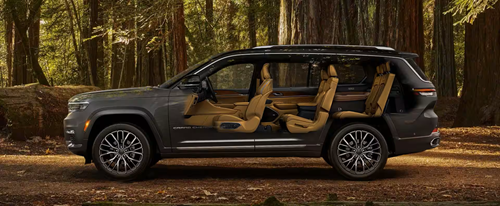
Jeep Grand Cherokee dissected to show the interior

Choosing your teenager's first SUV is a big decision that involves balancing reliability, affordability, and, most importantly, safety. According to the most recent teen driver safety statistics compiled by the National Highway Traffic Safety Administration (NHTSA), 2,034 young drivers (aged 15-20) died in car crashes in 2022 alone. That's about a fifth of all teen deaths. These alarming numbers underscore the importance of adopting safe driving habits and selecting a safe vehicle for your teen.

The 2025 Jeep Grand Cherokee is ideal for Columbus families seeking safety without compromising style or capability. This SUV boasts over 110 safety features, more than any competitor in its class. At Bob Caldwell Chrysler Jeep Dodge Ram (CJDR) in Columbus, Ohio, we'll guide you through what makes the Grand Cherokee one of the best cars for teenage drivers.

Crash Test Performance and Safety Ratings

The 2025 Grand Cherokee earned top marks from the NHTSA, which awarded it five out of five stars overall, including for frontal and side-impact protection. Rollover resistance received four stars. The Insurance Institute for Highway Safety named the 2024 Grand Cherokee a Top Safety Pick in the midsize SUV category. These ratings apply to all Grand Cherokee variants. Safety performance remains consistent, whether you choose the regular model, the Grand Cherokee L, or the hybrid 4xe.

Standard Safety Features Every Parent Will Appreciate

The Grand Cherokee comes standard with a long list of safety technologies. These features are built-in protections that can save your teen's life. They also ensure that the Grand Cherokee is among the best cars for young driver insurance. Highlights are:

  • Full-speed forward collision warning with active braking and pedestrian detection: If your teen gets distracted texting at a red light and doesn't brake when traffic stops, the Grand Cherokee will automatically engage the brakes. It also spots pedestrians and cyclists, a vital feature around Ohio State's campus or downtown Columbus.
  • Active lane management: Many teen drivers struggle with lane discipline and often drift between lanes. Active lane management is an advanced system that monitors the vehicle's position within lane boundaries and gently adjusts steering to correct unintentional drifting.
  • Blind-spot monitoring: Radar sensors monitor vehicles in blind spots or those crossing from behind when backing up. Yellow lights in the mirrors and audible chimes help warn the young driver of potential danger.
  • Adaptive cruise control with Stop & Go: This innovative cruise control system automatically adjusts the speed to maintain a safe following distance. It can even bring the vehicle to a complete stop in heavy traffic and resume once the road clears, allowing the young driver to focus on steering.
  • A backup camera with parking sensors: Every Grand Cherokee has a backup camera. The parking sensors help guide your teen into tight spots without scraping other cars, which is handy for busy school parking lots.

Premium Safety Tech Worth the Extra Cost

Several advanced features provide additional protection that justifies the investment for teen drivers. The list includes:

  • A night vision camera with pedestrian and animal detection:  This infrared camera scans 328 feet ahead, spotting deer and pedestrians that standard headlights might miss. It's invaluable during Ohio winters, with their early sunsets, and essential for teens still learning to spot hazards on the road and react quickly.
  • A 360-degree camera system:  Standard on the Summit and Summit Reserve trims, this feature provides a complete overhead view of the vehicle. Your teen can see exactly what's around them when parking or navigating tight spaces.
  • Hands-free driving assist:  While this might sound a bit unnerving, hands-free driving assist can help your teen stay safe on the road, especially during long, tiring drives. It's not full autonomy, so your teen will still need to pay attention and be ready to take control at any time.
  • Intersection collision assist:  Columbus intersections are hot spots for accidents, especially during peak hours. Intersection collision assist detects approaching vehicles at crossroads and alerts the young driver to potential collisions, giving them a chance to react and avoid an accident.
  • Drowsy driver detection:  Higher trims track driving patterns and alert tired drivers to take breaks. Drowsy driving is common among teen drivers, making this feature a valuable addition.

Setting Up Your Teen's Grand Cherokee

Correctly configuring the safety systems makes a huge difference in protecting your teen driver.

Safety System Configuration

Start by activating all available driver-assistance features through the Uconnect system's safety menu. Then set forward collision warning and lane departure warning to their most sensitive settings while your teen learns. You can dial back the alerts as they gain experience and build confidence.

Speed Controls

Speed controls allow you to program speed limits into the system. Set highway limits to the level you're confident your teen can handle as they build confidence on major freeways. The system tracks any attempts to exceed these limits, so you'll know if your teen tries to push boundaries.

Phone and Audio Limits

You can configure Uconnect to limit audio functions while driving and restrict phone connections to emergency contacts only, ensuring your teen focuses on perfecting their basic driving skills. The do not disturb mode can activate automatically when driving, ensuring your teen won't be tempted to chat or text while behind the wheel.

Tracking Your Teen's Driving With Connected Services

The Uconnect system provides detailed driving reports without being overly intrusive. Track location, speed patterns, hard braking, and rapid acceleration through the mobile app. Set geographic boundaries and get alerts if your teen travels outside approved areas. You can access this data through the mobile app, making it easy to monitor your teen's driving habits even when you're not in the car with them. 

Test-Drive the Feature-Rich 2025 Grand Cherokee at Bob Caldwell CJDR

If you're eager to discover in person how these safety features work, visit us at Bob Caldwell CJDR in Columbus, Ohio. We stock an extensive inventory of new and used vehicles, and our sales team understands what parents need when selecting a teen's first vehicle. You have plenty of options, whether looking for something budget-friendly or more luxurious, and you can arrange financing through our dealership, easing the car-buying process. Contact us online or call us at 614-888-2331 to schedule a test-drive. Don't wait to see this impressive safety technology in action.


Jeep Grand Cherokee Safety Features Frequently Asked Questions

Q: Is the 2025 Jeep Grand Cherokee a good SUV for teen drivers?
A: Yes. The 2025 Jeep Grand Cherokee is one of the safest midsize SUVs for new drivers. It offers over 110 advanced safety and driver-assist features, including automatic emergency braking, lane management, blind-spot monitoring, and adaptive cruise control — making it ideal for first-time drivers in Columbus.

Q: What safety ratings does the 2025 Grand Cherokee have?
A: The 2025 Grand Cherokee earned a five-star overall safety rating from the NHTSA and is a Top Safety Pick from the IIHS. These strong results highlight its crash protection, rollover stability, and structural strength.

Q: Which safety features help protect teen drivers in Columbus traffic?
A: Key features such as forward collision warning, blind-spot monitoring, lane-keeping assist, and intersection collision alerts help young drivers avoid common urban hazards. Advanced options like the night vision camera and 360-degree surround view add extra confidence in busy city driving.

Q: Can parents monitor their teen’s driving with the Grand Cherokee?
A: Yes. Through the Uconnect app, parents can track location, speed, and driving behavior, and even set boundaries or speed alerts. It’s a built-in way to help young drivers build safe habits without being intrusive.

Q: Where can I test-drive the 2025 Jeep Grand Cherokee in Columbus, Ohio?
A: Visit Bob Caldwell Chrysler Jeep Dodge Ram in Columbus to explore the 2025 Grand Cherokee lineup and experience its advanced safety technology firsthand. You can also schedule a test drive online or call 614-888-2331.


Photo Courtesy of Jeep
Posted in:

Recommended Posts

Electric cars charging

Apartment-Friendly Charging in Columbus: Pacifica Plug-in Hybrid Home Setup and Costs

Living in a Columbus apartment doesn't close the door on the benefits of plug-in hybrid driving. The Chrysler Pacifica Plug-in Hybrid gives urban dwellers electric efficiency without the headaches of full electric vehicle (EV) ownership. This practical vehicle fills the gap between gas engines and electric cars, fitting neatly into apartment life where charging options may be limited. Our team at Bob Caldwell Chrysler Dodge Jeep Ram can assist you with home charger guidance and plug-in hybrid charging tips. more Contact Us Pacifica Plug-in Hybrid Charging in Columbus: Simple Solutions for Apartments The Pacifica Plug-in Hybrid works well for Columbus apartment residents thanks to its smart dual powertrain. This combination of electric motors and a 3.6-liter V-6 Pentastar engine produces 260 horsepower while easing the concerns that often surround EVs. This plug-in hybrid delivers a 32-mile all-electric range and a total range of about 520 miles. Columbus continues to expand support for apartment residents owning plug-in hybrids and EVs, as city planners recognize the need for practical charging options. Everyday Charging Made Easy Chrysler designed the Pacifica Plug-in Hybrid with apartment life in mind, starting with the portable charging cord included with every vehicle. This durable, weatherproof system can be stored neatly in the cargo bin on the driver's side in its own storage bag. It works in rain or sun, indoors or out, allowing you to charge even if you don't have covered parking. Charging times fit easily into your daily routine. You can choose either Level 1 or Level 2 charging connected to a 120-volt outlet or a 240-volt outlet. The car's display screen shows the charging status and finish time, and built-in safety features help protect both the vehicle and apartment wiring. The Pacifica Plug-in Hybrid is noted for its ease of charging. Level 1 vs. Level 2 Charging: What's Right for Your Space? Level 1 charging is ideal for apartment life because it uses regular 120-volt outlets found in most buildings. This method adds 2 to 5 miles of range per hour and works well if you drive under 50 miles daily. A complete charge will take around 12 hours, but overnight charging is convenient and needs no installation. Level 2 charging speeds things up significantly, adding 10 to 60 miles of range per hour using 240 volts and delivering a full charge in about 2 hours. Installation costs typically range from $2,000 to $5,000, including equipment, labor, permits, and inspections. This option makes sense for apartment residents with dedicated parking who can persuade their landlords to approve installation, or drivers who prefer quick charges between errands. Plug and Power Options for Apartment Drivers Safety rules shape how charging works in apartment communities. When installing charging gear, National Electrical Code Section 625 calls for proper weatherproofing in outdoor locations and requires licensed electricians to handle the work. Apartment residents need charging outlets in garages or covered areas, with cords no longer than 25 feet for safety. This means asking your landlord to provide the proper electrical access. Many Columbus apartment buildings now offer shared charging stations with costs divided among residents. Mobile charging services are appearing around the city as well, giving you backup options when needed. Understanding Charging Costs in Columbus When looking at EV charging costs in Ohio, Columbus apartment residents benefit from Ohio's low electricity prices for plug-in hybrid charging. Ohio's rates sit at around 15.85 cents per kWh, lower than the U.S. average of 17.47 cents. That translates to home charging costs of roughly $26 per session, with monthly bills of around $49 for a sedan-sized EV. Costs strongly favor electric driving, as electricity averages about 5 cents per mile compared with gas at 11 cents per mile. For example, driving 1,015 miles monthly costs roughly $50 when charging at home at 17.47 cents per kWh, while gas for the same distance would total $110. Your apartment's billing setup makes a difference. If electricity is included in your rent, charging costs basically nothing, and if you're paying a separate electric bill, you can take advantage of off-peak pricing. Ways To Lower Your Charging Bill Columbus drivers can tap into several programs to cut charging expenses. The Federal Alternative Fuel Vehicle Refueling Property Credit covers 30% of the installation cost of a home charger up to $1,000, and more than 10 Ohio utility companies offer rebates from $200 to $1,000 for EV charger installations. Time-of-use billing can slash costs across Ohio. Several electric companies reduce their rates during overnight hours for EV and plug-in hybrid charging. While home chargers are typically quite expensive to install, yearly fuel savings compared to a regular vehicle make a plug-in hybrid worth it. Expanding Access: Public and Community Charging in Columbus Columbus has built a strong network of public charging stations that pairs well with home options for apartment dwellers. At Easton Town Center alone, drivers can use 24 charging stations across five parking areas, allowing you to charge while shopping. Local businesses are also installing more chargers thanks to substantial financial incentives. The Federal 30C Tax Credit covers up to $100,000 per charger or 30% of installation costs in qualifying areas. AEP Ohio and AES Ohio also provide partial rebates on charger costs. In 2024, Columbus passed a parking rule requiring new lots to include EV spaces, which indicates the city's support for more charging options. Experience the Pacifica Plug-in Hybrid Advantage in Columbus The Chrysler Pacifica Plug-in Hybrid addresses the common concerns Columbus apartment residents have about EVs. It offers simple charging with standard outlets, big savings compared to gas, no range worries thanks to its dual power system, and a great fit for apartment living. Our team at Bob Caldwell Chrysler Dodge Jeep Ram understands how to guide apartment residents through plug-in hybrid ownership. From charging options to installation support, we're ready to help. Call us at 614-888-2331 to schedule a test-drive. Bring home smarter driving and straightforward charging solutions today. Chrysler Pacifica Plug-in Hybrid FAQs for Columbus Apartment Drivers Q1. Is the Chrysler Pacifica Plug-in Hybrid practical for apartment living in Columbus, OH? Yes. The Pacifica Plug-in Hybrid works well for Columbus apartment residents because it can charge from standard outlets and still operates on gas when needed. Q2. Do I need a home charger to own a Pacifica Plug-in Hybrid? No. The Pacifica includes a portable Level 1 charging cord that works with standard 120-volt outlets commonly available in apartments. Q3. How far can the Pacifica Plug-in Hybrid drive on electric power? It offers about 32 miles of all-electric range, which covers many daily commutes and errands around Columbus. Q4. What charging options are available for apartment residents? Apartment drivers can use Level 1 charging, shared community chargers, public charging stations, or landlord-approved Level 2 installations. Q5. How long does it take to charge the Pacifica Plug-in Hybrid? Level 1 charging takes around 12 hours for a full charge, while Level 2 charging can complete a charge in about 2 hours. Q6. Is Level 1 or Level 2 charging better for apartment living? Level 1 charging is often better for apartments due to no installation requirements, while Level 2 works best with dedicated parking and landlord approval. Q7. How much does plug-in hybrid charging cost in Columbus? Electricity in Ohio averages around 15.85 cents per kWh, making electric driving cheaper per mile than gasoline for most Columbus drivers. Q8. Can apartment residents reduce charging costs? Yes. Off-peak charging, utility rebates, and federal tax credits can help reduce charging and installation expenses in Ohio. Q9. What happens if I cannot charge regularly? The Pacifica Plug-in Hybrid switches seamlessly to gas power, eliminating range anxiety common with full EVs. Q10. What mistakes should apartment drivers avoid with plug-in hybrids? Avoid using unsafe extension cords, ignoring landlord approval requirements, and underestimating the value of public charging access. Eco-Friendly Electric Cars in Underground Parking by Jakub Zerdzicki is licensed with Pexels License

road between snow-covered trees during daytime

Winter School-Run Sanity: Durango AWD, Remote Start, and Heated Features That Matter in Ohio

Snow blankets your driveway, but your children need to get to school, and you've got a meeting downtown. It's just another typical winter's day in Ohio, but unlike your neighbor who's still scraping ice off their windshield, you've already triggered your Dodge Durango's remote start from your kitchen. The cabin's warming up, snow-gripping all-wheel drive (AWD) is ready, and heated seats await your arrival. For Ohio families battling unpredictable weather, these are necessities that turn chaos into calm when winter shows its teeth. more New Dodge Durango For Sale Why the Dodge Durango AWD Is Ohio's Ultimate Winter Vehicle Ohio roads can be dangerous in winter, with lake-effect snow around Cleveland one day and farm-country ice patches the next. The Dodge Durango's AWD system moves power between the wheels automatically when trouble hits. If the front tires encounter ice, the system shifts power to the rear wheels to improve traction. The Bilstein Active-Damping High-Performance Suspension keeps tires pressed against the road surface when you need stability most. These systems work together to keep your family safe, whether you're cruising down I-71 or navigating ice and slush in busy parking lots. The 2025 Dodge Durango offers three engine choices: a 3.6-liter Pentastar V-6, a 5.7-liter HEMI V-8, or a supercharged 6.2-liter HEMI V-8. The R/T variant is paired with an eight-speed automatic transmission. It delivers 360 hp and 390 lb-ft of torque, giving you more than enough power to overcome winter's worst obstacles. The 2026 Durango GT AWD starts at $40,495, and the R/T AWD starts at $49,995. For that, you're buying peace of mind when weather forecasters give winter storm warnings and investing in technology that keeps working when conditions go from bad to worse. Check out the full range of available Durango models to find one that matches your family's needs. Remote Start, Tech, and Comfort Features For those cold Ohio mornings, the GT Plus includes remote start as standard, as well as heated front and second-row seats, adaptive cruise control, a lane departure warning, and a power liftgate. Start your Durango from the kitchen table, and by the time your children get their winter gear on, your car has melted frost from the windows and warmed the cabin. The dashboard features a 10.1-inch touch screen and Uconnect 5 setup, bringing Apple CarPlay and Android Auto with quick responses and wireless connectivity. The 2026 Durango GT also includes heated seats, AWD capability, navigation, a power liftgate that saves you from setting bags in slush, and separate climate zones. The Uconnect system's responsiveness means you can adjust temperatures or find alternate routes instantly. Essential Heated Features for Ohio Winter Comfort The 2025 Durango makes winter mornings in Ohio a little easier to bear. Heated front seats and a heated steering wheel come as standard. You also get multi-zone climate control. The GT Plus adds heated second-row seats, while the R/T Plus includes heated second-row seats with nappa leather-trimmed upholstery that feels luxurious. Upper trims include heated mirrors with power folding and driver's auto-dimming technology. In Ohio winters, this means you don't have to pull over to scrape ice from side mirrors during snow squalls. The mirrors warm automatically, melting ice and preventing accumulation, so you maintain visibility when conditions deteriorate. These heated elements work alongside traction control and electronic stability systems to keep your family safe and comfortable during winter drives. When it starts to rain or snow, rain-sensitive wipers activate without manual adjustment, while rear wipers and defrosters keep the back glass clear. The full 2025 Dodge Durango lineup starts with the GT variant. Parents who've white-knuckled through Lake County snowbelts understand that these aren't frivolous extras. They determine whether you make it to work, the children get to school on time, and winter errands become manageable or all-day ordeals. Experience Winter Confidence With Bob Caldwell CDJR If you want to see how these winter features perform on Ohio roads before committing, stop by Bob Caldwell CDJR for a test-drive in actual winter conditions. We'll match you with the right Durango based on your family's needs and budget. Give us a call at 614-888-2331 to arrange your visit. When winter hits, you'll have peace of mind knowing your Durango has got you covered. Dodge Durango Winter Features Frequently Asked Questions 1. What makes the Dodge Durango good for winter driving in Ohio? The Durango performs well in Ohio winters because its AWD system automatically shifts power to the wheels with the most traction. This helps maintain control on snow, slush, and ice. Heated features and remote start improve visibility and comfort on freezing mornings. 2. How does the Durango’s AWD system help on icy Ohio roads? Its AWD system moves torque between front and rear wheels when it detects slipping. This improves traction when driving on black ice, bridge frost, and snow-covered roads common across Ohio. 3. How long does it take for the Durango’s remote start to warm the cabin? Most Durango models begin warming the cabin and melting frost within a few minutes. By the time you finish loading kids or prepping for the commute, the interior is already comfortable. 4. What winter-ready features come standard on the Dodge Durango? Standard cold-weather features include heated front seats, a heated steering wheel, multi-zone climate control, and AWD capability on the appropriate trims. Higher trims add heated second-row seats and heated mirrors. 5. What’s the difference between AWD and 4WD for winter driving? AWD is automatic and always engaged, making it ideal for mixed winter conditions in Ohio. Traditional 4WD is driver-selectable and better for off-road or deep-snow situations. For daily commuting and school runs, AWD is more convenient. 6. What winter risks should Ohio drivers consider with the Durango? Drivers still need to watch for black ice, packed snow, and sudden lake-effect flurries. Even with AWD, stopping distances increase in winter, so traction control and ABS help maintain stability. 7. How do Ohio’s local conditions affect Durango winter performance? Lake-effect snow near Cleveland, icy rural roads in central counties, and sudden temperature swings require vehicles with strong traction systems and heated features. The Durango’s AWD and heated mirrors help manage these conditions. 8. What determines the Durango’s performance on snowy roads? Traction comes from AWD programming, tire quality, suspension stability, and engine torque. Heated mirrors, remote start, and wiper systems support visibility when winter weather intensifies. 9. Can the Durango handle steep or unplowed roads during Ohio storms? Yes, as long as the vehicle has proper winter tires. Its AWD and stability systems help it climb inclines and push through moderate unplowed snow, though extreme conditions still require caution. 10. What winter mistakes should Durango owners avoid? Drivers should avoid using worn all-season tires, overestimating AWD braking ability, skipping routine defrosting, and ignoring low-visibility hazards during heavy snow or freezing rain. road between snow-covered trees during daytime by Jon Tyson is licensed with Unsplash License

Football Stadium

OSU game‑day made easy: RAM 1500 tailgate power, storage, and curbside parking tips

If you're heading to Ohio State football home games, you'll be joining thousands of die-hard Buckeye fans turning parking lots into the ultimate tailgating experience. Columbus comes alive with scarlet and gray as families, alumni, and students transform every available space into food-filled gatherings. The Ram 1500 delivers everything you need for the power, smart storage, and muscle to make your Ohio State tailgate legendary. more Ram 1500 For Sale Why Your Ram 1500 Is the Perfect OSU Game-Day Vehicle The Ram 1500's 5.7-foot bed gives you 53.9 cubic feet of cargo space to work with. That should be plenty for your grill, coolers, chairs, and all that Buckeye gear you can't leave home without. If you need more room, the 6.4-foot bed bumps you up to 61.5 cubic feet. The real game-changer is the RamBox Cargo Management System, which doubles as a weatherproof cooler and locks tight. Your drinks stay chilled while freeing up bed space for everything else. For towing, the Ram 1500's 3.0L Hurricane I-6 engine hauls up to 11,550 pounds, the 3.6L Pentastar V-6 handles 8,110 pounds, while the 3.0L High-Output Hurricane I-6 pulls 9,920 pounds. Inside, you'll fit six people comfortably, with front legroom that measures 40.9 inches and rear legroom that runs from 35.6 to 45.2 inches, depending on your trim. Passenger volume spans 117 to 132 cubic feet, which is plenty of space for your crew on the drive to Columbus. What's more, with the multifunction tailgate's 60/40-split design, loading becomes effortless. There's even air suspension that adjusts the truck's height for easier gear access. Browse our selection of Ram 1500 trucks to find your perfect tailgating setup. Premium Parking Near Ohio Stadium Parking strategy can make or break your tailgating day, especially when you're rolling up in a full-size truck. Premier spots at the Ag Administration and Vivian lots can run up to $60. That may seem steep, but it puts you right next to the action with easy truck access all day long. Proximity locations such as Neil Avenue Garage and Arps Garage cost $40, while spots farther away cost $30, giving you decent access while saving cash for more tailgating goodies. All lots open at 5 a.m. sharp on game days. They're first-come, first-served, so get there early for the best spots. Woody Hayes Drive shuts down about four hours before kickoff for pedestrian safety. If you're parking in a more distant lot, the West Campus Shuttle runs from six hours before kickoff until an hour after the game ends. Maximizing Your Ram 1500's Power Systems for Tailgating When you're parked up in an Ohio Stadium lot for hours, your truck's electrical system becomes a mobile power plant. The 12V outlets scattered throughout your Ram 1500 handle phone charging, portable fans, and smaller tailgating gadgets to keep everyone comfortable. If you have 110V outlets, you can power electric grills, blenders for game-day margaritas, and even small fridges. Don't drain your battery, though. Fire up the engine every hour or so during tailgating sessions to keep everything charged and ready. For serious power needs that'll impress your tailgating neighbors, dual fuel generators are your secret weapon. They run on gasoline and propane with quiet operation, so you won't get complaints from fellow Buckeye fans trying to enjoy their pregame rituals. Safety is important with generators, though, and stadium security takes it very seriously. Put them on flat, stable surfaces at least 10 feet from vehicles, tents, and RV windows. You can also get solar generators that run silently, with no fuel required, meaning no exhaust smell or noise complaints — just clean power for your entire setup. Check out our commercial Ram 1500 options for even more power capability when you're going all-out for big games. Smart Storage Solutions in Your Ram 1500 DECKED Drawer Systems turn your truck bed into tailgating command central. These weatherproof storage solutions support a 2,000-pound load capacity and come with a lifetime warranty, giving you serious peace of mind when you're hauling full-size grills or cases of beer. Your Ram 1500's built-in storage works alongside aftermarket gear for maximum tailgating efficiency. Hidden compartments under the rear seats hold emergency tools, jumper cables, and backup supplies. The rear seats also fold completely flat for big cargo loads. In-floor storage bins in the rear passenger area feature drain plugs, making them ideal for wet, muddy cleanup gear after bad-weather games, while the center console has multiple compartments with adjustable dividers for smaller items. Make the Most of Ohio State Football Season Visit us at Bob Caldwell Chrysler Dodge Jeep Ram to check out our complete lineup of Ram 1500 trucks. Our team understands what Ohio State fans need, and we can find you the right model with the features you want for game-day success. You can also call us at 614-888-2331 to schedule a test-drive and see firsthand what a Ram 1500 can do for your tailgating game. With so many games in the Buckeyes' schedule, don't spend another season settling for less when your tailgating crew deserves better — get the truck that's made for tailgating dominance. FAQ: Ram 1500 Tailgating Tips for Ohio State Football Games Why is the Ram 1500 a great truck for OSU game-day tailgating? The Ram 1500 offers strong power, smart storage, and plenty of space for passengers and gear. Features like RamBox storage, a multifunction tailgate, and optional air suspension make it ideal for efficient, organized tailgating near Ohio Stadium. How much cargo space does the Ram 1500 bed provide? The 5.7-foot bed offers 53.9 cubic feet of space, while the 6.4-foot bed increases capacity to 61.5 cubic feet, giving you plenty of room for grills, coolers, chairs, and OSU gear. What can you store in the RamBox Cargo Management System? RamBox compartments are weatherproof, lockable, and can be used as built-in coolers. They keep drinks cold while freeing up the truck bed for larger equipment. How many passengers can the Ram 1500 seat? Depending on configuration, the Ram 1500 seats up to six passengers, with generous legroom—40.9 inches in the front and 35.6–45.2 inches in the rear. What is the Ram 1500’s towing capacity? Towing capability varies by engine: 3.0L Hurricane I-6: up to 11,550 lbs 3.6L Pentastar V-6: up to 8,110 lbs 3.0L High-Output Hurricane I-6: up to 9,920 lbs Where should I park my Ram 1500 for Ohio State home games? Premium parking near Ohio Stadium includes the Ag Administration and Vivian lots (about $60). Neil Avenue Garage and Arps Garage run about $40, while other campus lots cost around $30. What time do OSU game-day parking lots open? All official lots open at 5 a.m. on game days, and spots are first-come, first-served. Arrive early for the best location, especially with a full-size truck. How can I power my tailgating setup using the Ram 1500? The truck’s 12V outlets handle chargers and small devices, while 110V outlets can run electric grills, blenders, and mini-fridges. For larger setups, dual-fuel or solar generators provide additional power. What storage options help organize gear inside the Ram 1500? The truck offers multiple smart storage solutions: DECKED drawers with 2,000-lb load capacity Under-seat compartments for tools and supplies In-floor bins with drain plugs for muddy gear Adjustable center-console storage for smaller items Where can I buy or test-drive a Ram 1500 for tailgating? Visit Bob Caldwell Chrysler Dodge Jeep Ram or call 614-888-2331 to test-drive a Ram 1500 and explore models ideal for Ohio State football tailgating. Huge stadium in metropolitan in daylight by Kelly is licensed with Pexels License.